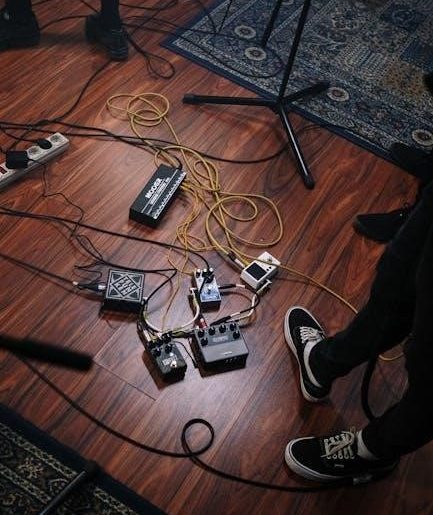
The Boss RC-3 is a powerful tool for musicians, offering intuitive looping capabilities and creative sound manipulation. This guide provides essential information
for maximizing your experience, prioritizing safety, and understanding step-by-step operation, as detailed in recent manuals.
What is the Boss RC-3?
The Boss RC-3 Loop Station is a compact and versatile device designed for live performance and studio experimentation. It allows musicians to record and playback audio in real-time, creating layered loops.
Recent manuals emphasize its role in maximizing performance and offering creative possibilities. It’s built with safety in mind, providing a robust and reliable platform for looping,
and is presented as user-friendly with a step-by-step guide for effortless operation.
Key Features and Specifications
The Boss RC-3 boasts 99 memory locations for storing loops, rhythm guide functions, and onboard effects for sound manipulation. Manuals highlight its intuitive interface and robust build quality. It offers flexible connectivity options and supports external pedal control.
Safety is a core design element, ensuring reliable performance. The RC-3 is presented as a tool to “Get the Most Out of It!” through detailed guidance.

Getting Started with Your RC-3
Unboxing reveals a user-friendly loop station designed for effortless operation. The manual emphasizes a step-by-step approach to quickly begin creating and enjoying loops.
Unboxing and Initial Setup
Carefully unpack your Boss RC-3 Loop Station, ensuring all included accessories are present. The manual highlights checking for any visible damage during shipping. Initial setup involves connecting the power adapter and desired input/output cables.
Familiarize yourself with the unit’s physical layout, noting the location of key controls. Before powering on, review the safety guidelines detailed in the provided documentation to ensure proper and safe operation from the start.
Powering On and Basic Controls
To power on the RC-3, press the power button located on the rear panel. The display panel will illuminate, indicating the unit is ready. The manual emphasizes understanding the core controls: Record, Play, Stop, and Undo/Redo.
Experiment with these functions to grasp their basic operation. Begin with simple looping exercises, focusing on timing and synchronization, as suggested for effortless operation.
Understanding the RC-3 Interface
The RC-3 interface features looping controls, memory storage, and a clear display panel. Familiarizing yourself with these elements is crucial for efficient loop creation and manipulation.
Looping Controls: Record, Play, Stop
The core of the RC-3 lies in its intuitive looping controls. Pressing the “Record” button initiates loop capture, building layers upon existing sounds. “Play” starts playback of the created loop, allowing for overdubbing or solo performance.
The “Stop” button halts both recording and playback, finalizing the current loop. Mastering these three functions is fundamental to unlocking the RC-3’s full potential, enabling seamless and dynamic musical expression. These controls are essential for effortless operation.
Memory and Storage
The Boss RC-3 boasts internal memory capable of storing numerous loops, categorized into banks for easy organization. Loops are saved directly to the unit, allowing for quick recall during live performances or studio sessions.
Effective memory management is crucial; regularly backing up loops prevents data loss. The RC-3’s storage system facilitates a streamlined workflow, ensuring your creative ideas are always readily accessible and preserved for future use;
Display Panel and Indicators
The RC-3’s display panel provides crucial visual feedback, showing loop status, memory bank selection, and rhythm guide settings. Indicators clearly signal recording, playback, and overdubbing modes. Brightness adjustments optimize visibility in various lighting conditions.
Understanding these visual cues is essential for intuitive operation. The panel’s layout ensures quick access to vital information, enhancing your creative flow and control over the looping process.
Looping Techniques
Mastering loops involves basic creation, layering sounds with overdubbing, and utilizing the undo/redo functions for seamless editing and refined musical arrangements.
Basic Loop Creation
Initiating a loop with the RC-3 is straightforward. Press the “Record” button to begin capturing audio; the loop length is determined by the next press of the same button.
Experiment with timing to achieve desired results. The manual emphasizes practicing rhythmic accuracy for clean loop starts and endings. Remember to adjust input levels for optimal recording quality, avoiding distortion.
Successful looping relies on precise timing and a clear understanding of the RC-3’s responsive controls.
Overdubbing and Layering
Adding layers to your loops is a core RC-3 function. After establishing a base loop, press “Record” again to overdub additional parts; The manual highlights that overdubbing builds complexity, allowing for dynamic arrangements.
Experiment with different sounds and rhythms. Be mindful of the loop’s existing texture; careful layering prevents muddiness. Utilize the level control to balance new and existing loop elements effectively.
Undo/Redo Functionality
The RC-3’s undo/redo feature is crucial for correcting mistakes during loop creation. The user manual details how pressing the “Undo” button reverts to the previous loop state. “Redo” then restores the undone action.
This allows for non-destructive experimentation. Remember that multiple undo/redo steps are possible, offering flexibility. Mastering this function streamlines workflow and encourages creative risk-taking.
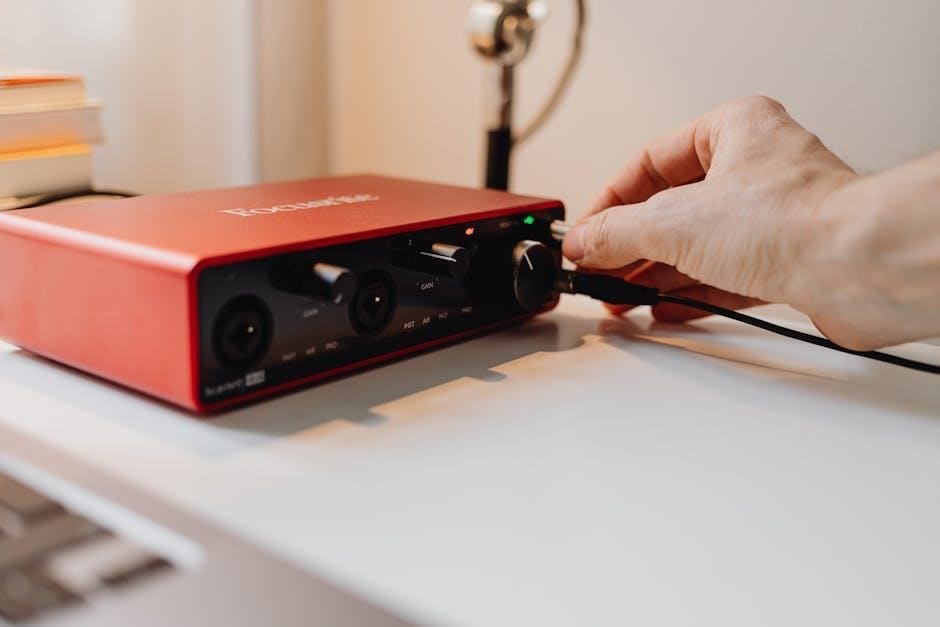
Advanced Features
Explore rhythm guides, phrase looping, and effects for deeper sound manipulation. The RC-3 manual unlocks these capabilities, expanding creative potential beyond basic looping functions.
Rhythm Guide Functions
The RC-3’s rhythm guide functions are invaluable for practicing and performing. These built-in rhythms provide a solid tempo foundation for your loops, ensuring timing accuracy. You can select from a variety of musical styles and adjust the tempo to suit your needs.
The manual details how to customize rhythm patterns, adjust volume levels, and even use the rhythm guide to create complex polyrhythms. Experimenting with these features unlocks a new dimension of rhythmic possibilities within your looping performances, enhancing musicality.
Phrase Looping
Phrase Looping on the RC-3 allows for the creation of shorter, more defined loop segments within a larger loop. This feature is ideal for building intricate arrangements and adding dynamic variations to your performances. The user manual explains how to designate specific sections of a loop as phrases.
You can then trigger and manipulate these phrases independently, creating rhythmic and melodic interplay. Mastering phrase looping unlocks advanced compositional techniques and elevates your live looping capabilities significantly.
Effects and Sound Manipulation
The RC-3 boasts a range of built-in effects to enhance your loops. These include reverb, delay, flanger, and more, allowing for extensive sound manipulation. The user manual details how to apply effects both during loop recording and playback, shaping your sonic textures.
Experiment with different effect combinations to create unique and inspiring soundscapes. Real-time control via the footswitch enables dynamic effect adjustments during live performances, adding another layer of creativity.

Memory Management
Effectively managing the RC-3’s memory is crucial for storing and organizing loops. The manual explains saving, loading, and backing up loops into designated banks for easy access.
Saving and Loading Loops
The Boss RC-3 allows for seamless saving and loading of your created loops, ensuring your musical ideas are preserved. The user manual details how to write loops to internal memory or an external storage device.
Loops are organized into banks for efficient retrieval. To save, navigate to the write function and select a memory slot. Loading is equally straightforward, simply selecting the desired bank and loop number.
Organizing Loops into Banks
The Boss RC-3 simplifies loop management through its bank system. The user manual explains how to categorize loops into numbered banks, facilitating quick access during live performance or studio sessions. This organizational structure prevents clutter and streamlines workflow.
Creating a logical bank structure – by song, genre, or tempo – is highly recommended for efficient loop retrieval and creative exploration;
Backing Up Your Loops
Protecting your creations is vital; the Boss RC-3 manual details backup procedures. Loops can be transferred to a computer via USB, safeguarding against data loss. Regularly backing up ensures your musical ideas are preserved. This process involves connecting the RC-3 and utilizing dedicated software for seamless file transfer, offering peace of mind.
Connectivity and External Control
Expand your setup with the RC-3’s versatile connections. Utilize external pedals for hands-free control and integrate MIDI devices for advanced sequencing capabilities.
Input and Output Connections
The Boss RC-3 features a standard ¼ inch input for connecting your instrument or audio source. Stereo outputs allow connection to amplifiers, mixers, or recording interfaces. An additional auxiliary input accommodates external audio playback. Remember to properly match impedance levels for optimal signal quality. The RC-3 also includes a dedicated output for monitoring with headphones, ensuring private practice sessions. Careful cable management will prevent unwanted noise and ensure reliable performance.
Using External Pedals
The Boss RC-3 expands control via external footswitches connected through its remote input. Assign pedals to functions like loop start/stop, or effect activation for hands-free operation. Expression pedals can modulate effects parameters in real-time, adding dynamic control. Ensure compatibility with the RC-3’s specifications for seamless integration. Proper pedal assignment enhances live performance capabilities and creative expression.
MIDI Control

The Boss RC-3 offers extensive MIDI control, enabling synchronization with other devices and integration into complex setups. MIDI messages can trigger loop playback, recording, and effect changes. Configure MIDI parameters to match your workflow, allowing external controllers to manage the RC-3 remotely. This unlocks advanced sequencing and automation possibilities for live and studio applications.

Troubleshooting Common Issues
Addressing problems like no sound, looping errors, or power failures is crucial for uninterrupted performance. This section provides solutions to quickly resolve typical RC-3 issues.
No Sound Output
If you experience no sound, first verify the input and output connections are secure. Ensure the RC-3’s volume is turned up and not muted. Check the connected instrument or audio source is powered on and producing sound. Confirm the selected loop isn’t empty or frozen without audio content.
Also, examine the input level settings; a too-low input may result in inaudible loops. Try a different cable to rule out a faulty connection. Finally, consult the manual for specific troubleshooting steps related to your setup.
Looping Errors
Encountering looping errors? First, ensure sufficient memory is available; full memory can cause recording failures. Check for excessive overdubbing, which can strain processing. If loops glitch or stutter, try reducing the loop length or simplifying the arrangement. Verify the tempo is within the RC-3’s supported range.
Restarting the unit can often resolve temporary glitches. Refer to the manual for error code explanations and advanced troubleshooting steps if problems persist.
Power Problems
Experiencing power issues? Always verify the AC adapter is securely connected to both the RC-3 and a functioning power outlet. If using batteries, ensure they are fresh and correctly installed. A flashing power indicator suggests low battery levels; replace them immediately.
Avoid using damaged power cables. If the unit fails to power on, consult the specifications section for correct voltage requirements and consider testing with a different adapter.

Safety Precautions
Prioritize safety! The Boss RC-3 is designed with user well-being in mind. Always follow general safety guidelines and avoid actions that could damage the unit.
General Safety Guidelines
Ensure a safe environment when operating the Boss RC-3. Avoid using the unit in excessively humid or dusty locations. Do not attempt to disassemble or modify the device, as this could result in electric shock or malfunction. Keep the RC-3 away from liquids and extreme temperatures.
Always disconnect the power supply before cleaning. This product is designed with safety as a primary concern, so adhere to these guidelines.
Avoiding Damage to the Unit
Protect your Boss RC-3 from potential harm. Avoid dropping or subjecting it to strong impacts. Do not place heavy objects on top of the unit. Refrain from using excessive force when operating the controls. Keep the input and output jacks free from dust and debris. Proper care ensures longevity and consistent performance, safeguarding your investment.
Firmware Updates
Regular firmware updates enhance the RC-3’s functionality and stability. Check the Boss website frequently for available updates and follow the provided instructions carefully for installation.
Checking for Updates
To check for firmware updates, visit the official Boss website and navigate to the support section for the RC-3 Loop Station. Download the latest update if available, and carefully read the accompanying release notes detailing improvements and any necessary precautions.
Connecting your RC-3 to a computer is usually required for the update process, utilizing a USB cable. Ensure a stable connection throughout the entire procedure to prevent errors and potential damage to the unit.
Updating the Firmware
Follow the instructions provided by Boss meticulously during the firmware update process. Typically, this involves transferring the downloaded update file to your RC-3 via USB. Do not interrupt the update – power loss or disconnection can brick the unit.
The RC-3’s display will guide you through each step, showing progress. Once complete, verify the new firmware version in the unit’s settings menu.
Specifications
The RC-3 boasts detailed specifications regarding power requirements, physical dimensions, and overall weight, crucial for setup and portability. Refer to the official documentation for precise values.
Power Requirements
The Boss RC-3 operates on a DC 9V power supply, with a recommended current draw of 800mA. It can also be powered via batteries – six AA-size alkaline or nickel-metal hydride batteries are supported, offering portability.
Ensure the power supply matches the specified voltage to avoid damage. Battery life varies depending on usage and battery type, so consider an AC adapter for extended sessions.
Dimensions and Weight
The Boss RC-3 boasts a compact and durable design, measuring approximately 152 mm (6.0 inches) in width, 125 mm (4.9 inches) in depth, and 58 mm (2.3 inches) in height. Its weight is around 950 grams (2.1 pounds) without batteries. These specifications ensure portability and ease of integration into various performance setups, making it ideal for both studio and stage use.

Accessories
Included with the RC-3 are an AC adapter for power, and a manual offering guidance on operation and maximizing the loop station’s potential.
Included Accessories
Your Boss RC-3 Loop Station package includes everything you need to begin creating loops immediately. A crucial component is the AC adapter, ensuring reliable power for performances and practice sessions. Furthermore, a comprehensive user manual is provided, detailing all functions, offering troubleshooting tips, and maximizing the device’s creative potential. This manual is designed for both beginners and experienced loopers, guiding you through every step of the process.
Optional Accessories
To expand your RC-3’s capabilities, consider optional accessories like a footswitch for hands-free control during live performances. An expression pedal allows for real-time manipulation of effects and loop parameters, adding dynamic textures. Additionally, a dedicated case provides protection during transport, ensuring the longevity of your investment. These additions enhance workflow and unlock further creative possibilities.
Warranty Information
Boss provides warranty coverage for the RC-3, protecting against manufacturing defects. Review the included documentation for specific terms and claim procedures, ensuring peace of mind.
Warranty Coverage
The Boss RC-3 warranty typically covers defects in materials and workmanship for a specified period from the date of purchase. This coverage doesn’t extend to damage resulting from misuse, accidents, or unauthorized modifications;
Specifically, the warranty ensures the unit functions as intended under normal operating conditions. Proof of purchase is essential for any warranty claim. Refer to the official Boss documentation for the precise duration and complete details of the warranty terms, as they may vary by region.
How to Claim Warranty
To initiate a warranty claim for your Boss RC-3, first contact Boss customer support or an authorized service center. You’ll need your proof of purchase and a detailed description of the issue.
Carefully package the unit for shipment, including all accessories. Boss will provide instructions for returning the product for inspection and repair or replacement, if covered under warranty terms.
Resources and Support
For comprehensive assistance, visit the official Boss website for support, FAQs, and downloadable resources. Engage with online forums and communities to share tips and troubleshoot.
Boss Website and Support
The official Boss website is your primary hub for RC-3 support. Here, you’ll find a dedicated product page with downloadable manuals, including the comprehensive user guide, and helpful FAQs addressing common issues. Explore the support section for troubleshooting tips, firmware updates, and detailed specifications. Access additional resources like product registration, warranty information, and contact details for direct assistance from Boss customer support representatives. Utilize their knowledge base for in-depth articles and tutorials.
Online Forums and Communities
Numerous online forums and communities are dedicated to the Boss RC-3, offering a wealth of user-generated content. Engage with fellow musicians to share tips, tricks, and looping techniques. Explore discussions on troubleshooting, creative applications, and advanced features. Find helpful tutorials and demonstrations posted by experienced RC-3 users. Benefit from collective knowledge and receive personalized support from a passionate community. Discover innovative ways to maximize your looping potential.