
Australian Error Coins List PDF: A Comprehensive Guide
Discover a wealth of information regarding Australian numismatic anomalies! PDF guides detail valuable errors, varieties, and mis-strikes, aiding collectors in identification and valuation efforts.
Australian error coins represent a fascinating niche within the broader field of numismatics, captivating collectors with their unique histories and potential value. These aren’t simply mistakes; they are tangible remnants of the minting process, showcasing deviations from the standard design and production. The allure stems from their rarity – errors are, by definition, unintended – and the stories they tell about the creation of currency.

PDF lists and online resources have become invaluable tools for enthusiasts seeking to understand and identify these anomalies. These guides often categorize errors, providing detailed descriptions and visual aids to assist in accurate assessment. The market for Australian error coins is dynamic, influenced by factors like mintage numbers, condition, and collector demand. Understanding these elements is crucial for both novice and experienced collectors aiming to build a valuable and rewarding collection. Exploring these resources unlocks a deeper appreciation for the artistry and occasional imperfections of Australian coinage.
What are Australian Coin Errors?
Australian coin errors encompass a diverse range of unintentional deviations from the standard specifications during the minting process. These anomalies can manifest in various forms, from minor imperfections to significant distortions of the coin’s design or composition. They aren’t deliberate variations; rather, they are the result of mechanical failures, die issues, or human error during production.
PDF lists detailing these errors categorize them broadly into die errors and minting errors. Die errors occur due to flaws in the tooling used to strike the coins, while minting errors arise during the actual striking or handling of the coins. These errors can dramatically impact a coin’s value, sometimes multiplying its face value by thousands. Identifying these errors requires careful examination and often, comparison with known examples documented in comprehensive guides. Collectors rely on these resources to authenticate and accurately assess the worth of potentially valuable finds.
Types of Australian Coin Errors
Australian coin errors, as detailed in numerous PDF lists, are broadly classified into two primary categories: Die Errors and Minting Errors. Die errors originate from imperfections or damage to the metal stamps used to imprint the coin’s design. Common examples include misaligned dies, where the top and bottom dies aren’t perfectly aligned, and doubled die errors, resulting in a doubling of the design elements.
Minting errors, conversely, occur during the coin-striking process itself. These can encompass issues like double feeding – where a coin is struck multiple times – or off-center strikes. PDF guides often provide visual aids to help collectors distinguish between these error types. Understanding these classifications is crucial for accurate identification and valuation, as different error types command varying premiums in the collector’s market. Detailed lists categorize and illustrate these variations for enthusiasts.
Die Errors
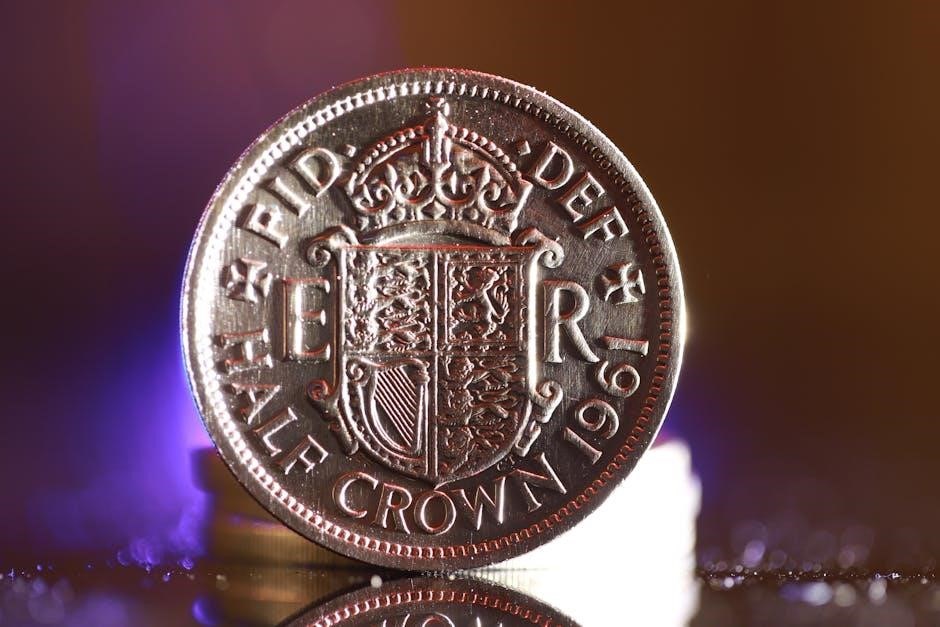
Die errors, extensively documented in Australian error coin PDF lists, represent defects originating from the coin’s die – the metal stamp creating the coin’s image. These aren’t minting process flaws, but rather imperfections in the die itself. PDF resources highlight that these errors can significantly impact a coin’s value, depending on rarity and visibility.
Common die errors include cracks, chips, or even complete die failures. These imperfections transfer onto the coins struck with the damaged die, creating unique variations. PDF guides often feature magnified images to aid identification. Collectors actively seek these anomalies, as they represent a tangible piece of minting history. Understanding the nuances of die error identification, as presented in detailed PDFs, is key to building a valuable collection.
Misaligned Die Errors
Misaligned die errors, thoroughly cataloged in Australian error coin PDF lists, occur when the obverse and reverse dies aren’t perfectly aligned during the striking process. This results in an “off-center” strike, where the design isn’t centered on the coin’s planchet. PDF guides detail varying degrees of misalignment, from slight shifts to extreme off-center strikes where only a portion of the design appears.
PDF resources emphasize that the value increases with the severity of the misalignment. A completely off-center strike, showing only a fragment of the design, is highly sought after. Collectors utilize PDFs to understand grading criteria for these errors. Identifying these errors requires careful examination, and PDFs provide comparative images. These errors are a fascinating example of the precision required in coin production, and their presence adds significant collector interest.
Doubled Die Errors
Doubled die errors, extensively documented in Australian error coin PDF lists, arise from a damaged die where the design has been doubled. This doubling appears as a shadow-like effect on the coin’s features, visible under magnification. PDF guides categorize doubled die errors based on the extent and location of the doubling – Class I (slight), Class II (moderate), and Class III (severe).
PDF resources highlight that the value of a doubled die error depends on the clarity and completeness of the doubling. Full band doubling, where the entire design is doubled, is the most valuable. Collectors rely on PDFs for accurate identification, as machine doubling can be mistaken for a true doubled die. These PDFs often include detailed images for comparison. Understanding these nuances is crucial, and PDF guides provide the necessary expertise for collectors.
Minting Errors
Minting errors, comprehensively cataloged in Australian error coin PDF lists, encompass a broad range of anomalies occurring during the coin striking process. These errors deviate from the intended design and specifications, often significantly impacting a coin’s value. PDF guides detail various minting errors, including broadstrikes (missing rim), off-center strikes, and incomplete strikes, providing collectors with essential identification tools.
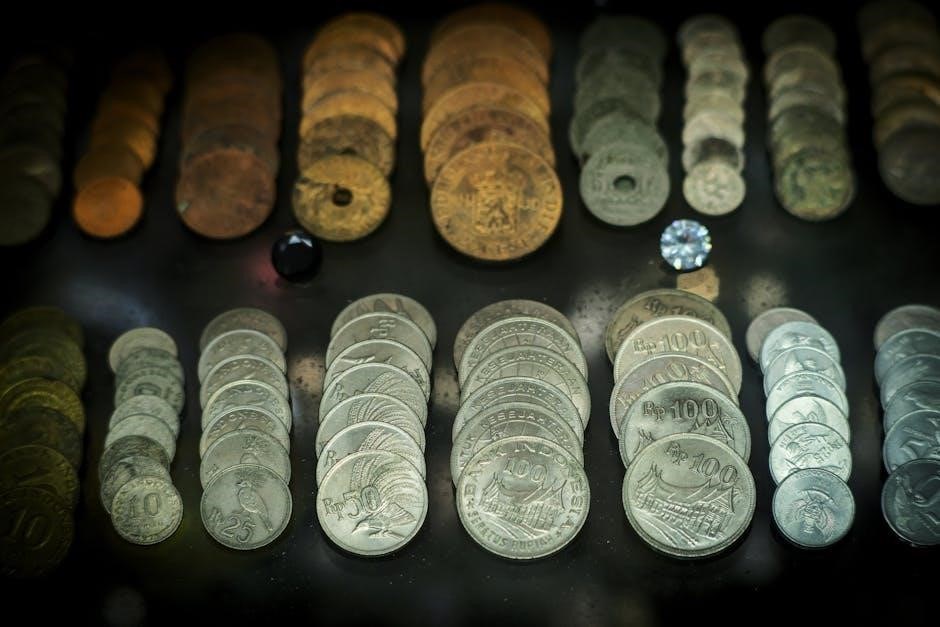
PDF resources emphasize that the severity of a minting error influences its collectibility. Errors resulting in a drastically altered appearance or significant metal loss are generally more sought after. Detailed PDFs often include grading criteria specific to minting errors, helping collectors assess condition and value. These PDFs are invaluable for verifying authenticity and understanding the factors driving market prices, ensuring informed collecting decisions.
Popular Australian Error Coins
Australian error coin PDF lists frequently highlight several key dates and denominations renowned for their valuable errors. The 1966 20c without a dot is a prime example, consistently commanding a premium due to its rarity. Similarly, the 1972 1c exhibiting a double feed error is highly sought after by collectors, as detailed in numerous PDF guides.
PDF resources also showcase the 1982 20c with an offset head, another popular error. These PDFs provide detailed imagery and descriptions to aid in identification. Collectors utilize these PDF lists to understand the market value of these specific errors, which can range from several times face value to substantial sums depending on condition. PDFs often include historical context and auction records, offering a comprehensive overview of these popular anomalies.
1966 20c Error — No Dot
PDF guides dedicated to Australian error coins consistently feature the 1966 20c ‘No Dot’ variety as a significant find. This error stems from a missing mintmark – the small dot typically present on the obverse below the Queen’s effigy. PDF lists detail how this omission occurred during the die production process, creating a relatively scarce and highly collectible coin.
PDF resources illustrate the difference between the standard 1966 20c and the error coin, aiding in accurate identification. Values, as detailed in PDFs, vary greatly based on condition, ranging from several dollars for a circulated example to hundreds for a pristine uncirculated specimen. Collectors actively seek this error, making it a frequently discussed item in online forums and PDF valuation guides. The PDFs emphasize the importance of authentication.
1972 1c Error ‒ Double Feed
Australian error coin PDF lists frequently highlight the 1972 one-cent ‘Double Feed’ error as a noteworthy variety. This occurs when a coin is fed into the coining press twice, resulting in a significant doubling of the design elements, particularly noticeable on the reverse. PDF guides explain that this is a minting error caused by a malfunction in the coin-feeding mechanism.
PDF resources provide clear images illustrating the distinct doubling effect, assisting collectors in identifying genuine examples. Valuation PDFs indicate that the severity of the doubling directly impacts the coin’s worth, with more pronounced errors commanding higher prices. These PDFs often detail how to differentiate genuine double-feed errors from altered or counterfeit coins. Online forums referenced in PDFs discuss the rarity and desirability of this error, making it a popular target for collectors seeking unique pieces.
1982 20c Error ‒ Offset Head
Australian error coin PDF guides commonly feature the 1982 twenty-cent ‘Offset Head’ as a significant error. This anomaly arises from a misaligned die, causing the portrait of Queen Elizabeth II to appear noticeably shifted or ‘offset’ from its correct position on the coin. PDF resources explain that this misalignment occurs during the striking process, when the dies don’t perfectly align.
PDFs dedicated to error coins provide detailed images showcasing the degree of offset, helping collectors accurately identify this variety. Valuation PDFs indicate that the extent of the offset influences the coin’s value, with more dramatic shifts being more desirable. These PDFs also offer guidance on authenticating the error, distinguishing it from damage or alterations. Collector forums, often linked in PDFs, discuss the relative rarity and market demand for this particular error, making it a sought-after find.
Factors Affecting Error Coin Value
Australian error coin PDF guides consistently emphasize several key factors influencing value. Rarity is paramount; less frequent errors command higher prices, as detailed in valuation PDFs. Condition plays a crucial role – coins in superior condition, free from wear or damage, are significantly more valuable, as grading guides within PDFs illustrate.
Demand, often discussed in collector forums linked within PDFs, also impacts price. Popular errors, like the 1966 20c ‘No Dot’, attract more buyers. PDF resources highlight that the visibility and severity of the error contribute to value; a prominent misalignment is worth more than a subtle one. Finally, authentication is vital; a verified error, confirmed by expert opinion or PDF-referenced grading services, will always fetch a premium price compared to unverified specimens.
Condition Grading for Error Coins
PDF guides on Australian error coins stress that standard grading scales apply, but with nuances. While assessing a coin’s wear, the error itself must be considered – does wear obscure or diminish the error’s visibility? PDF resources often adapt established grading terms (Mint State, Extremely Fine, etc.) to account for error-specific factors.
Damage, like cleaning or scratches, drastically reduces value, as highlighted in valuation PDFs. However, some errors are inherently prone to wear, and minor wear might be acceptable. PDFs emphasize that originality is key; alterations attempting to enhance an error’s appearance are detrimental. Collectors referencing PDFs prioritize coins with minimal handling and preservation of the original surface, even if the error isn’t pristine. Accurate grading, informed by PDF guides, is crucial for fair transactions.

Where to Find Australian Error Coin Lists (PDF)

Downies.com frequently publishes PDF resources detailing significant Australian error coins, often showcasing key examples and estimated values. These PDFs, like “Important ERROR COINS,” are available on their website and provide a starting point for research. Several online forums and collector communities compile and share PDF checklists and guides, though verifying their accuracy is vital.
A targeted Google search using terms like “Australian coin error PDF” yields numerous results, including downloadable lists from coin dealerships and enthusiast websites. Be cautious of unofficial sources; prioritize reputable dealers and established collector groups. Many PDFs are also shared within Facebook groups dedicated to Australian coin collecting. Remember to cross-reference information from multiple PDFs to ensure comprehensive and reliable data.
Downies.com Error Coin Resources
Downies.com stands as a premier resource for Australian error coin information, consistently offering valuable PDF guides and detailed listings. Their publications, such as “Important ERROR COINS,” provide collectors with insights into rare minting mistakes and potential values. These PDFs often feature high-quality images aiding in identification, and cover a range of errors across different denominations and years.
Downies’ website also hosts articles and blog posts discussing specific error types, contributing to a deeper understanding of these numismatic anomalies. They frequently update their resources, reflecting current market trends and newly discovered errors. Beyond PDFs, Downies offers expert appraisals and authentication services, ensuring the legitimacy of your finds. Regularly checking their website is recommended for the latest Australian error coin information and downloadable resources.
Online Forums and Collector Communities
Engaging with online forums and collector communities is invaluable when researching Australian error coins and accessing PDF lists. These platforms foster knowledge sharing, allowing collectors to discuss finds, seek identification assistance, and debate valuations. Numerous dedicated groups exist, specializing in Australian numismatics, where members frequently share scans of error coins and relevant PDF documentation.
Forums provide a space to ask questions, learn from experienced collectors, and stay updated on market trends. Many members compile and share their own PDF lists of known errors, supplementing official resources. Be mindful of verifying information obtained online, cross-referencing with reputable sources. Active participation in these communities enhances your understanding and expands your network within the Australian error coin collecting world.
Identifying Authentic Error Coins
Authenticating Australian error coins requires diligent scrutiny, as counterfeits exist. Utilizing detailed PDF lists as a reference point is crucial, but visual confirmation is paramount. Examine the error closely – does it align with documented examples? Look for telltale signs of artificial alteration, such as tooling marks or inconsistencies in the error’s appearance.
Compare the coin to high-resolution images in PDF guides and online databases. Pay attention to the sharpness of details and the consistency of the error across the coin’s surface. Be wary of coins offered at prices significantly below market value, as this can indicate a fake. Seeking opinions from experienced collectors within established communities can provide valuable second opinions and help ensure the authenticity of your finds.
Avoiding Counterfeit Error Coins
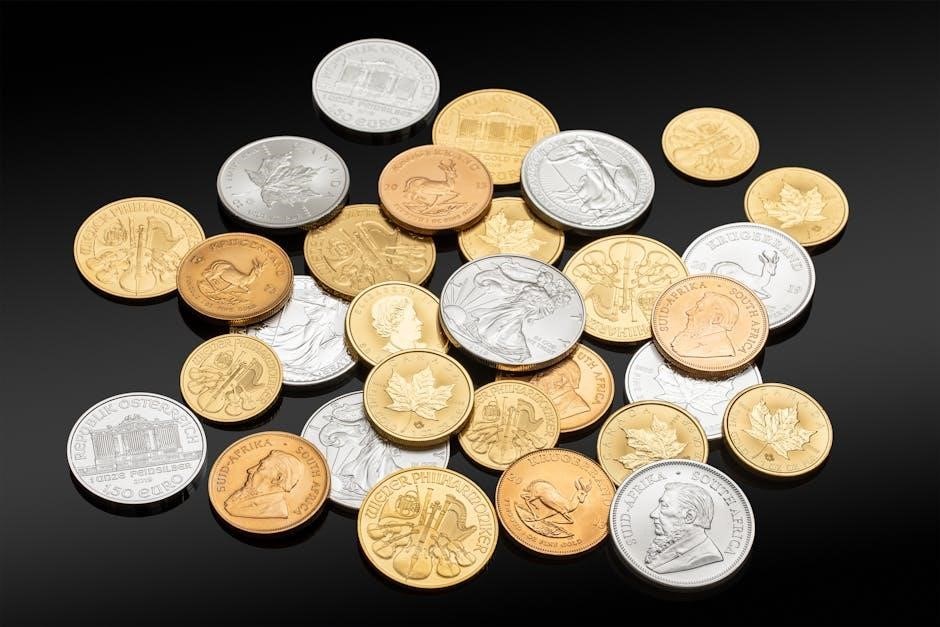
Protecting your investment necessitates caution when acquiring Australian error coins. Scrutinize sellers thoroughly; reputable dealers with established histories are preferable. Be extremely wary of online auctions with vague descriptions or low-quality images – these are common avenues for counterfeit coins. Always request detailed photographs before committing to a purchase, focusing on the specific error in question.
Utilize PDF lists and collector forums to research typical pricing for specific errors. Significantly low prices should raise immediate red flags. If possible, obtain a professional authentication and grading service’s opinion before finalizing a purchase. Remember, a coin’s value hinges on its authenticity; due diligence is essential to avoid acquiring a worthless imitation and safeguard your collection.
Resources for Valuing Error Coins
Determining the value of Australian error coins requires utilizing diverse resources. PDF lists, often compiled by dealers like Downies.com, provide initial estimates, though these are subject to market fluctuations. Online collector forums offer valuable insights from experienced numismatists, enabling you to gauge current demand and pricing trends for specific errors.
Consider auction records from reputable auction houses as benchmarks. Websites specializing in coin values can offer guidance, but remember these are often approximations. Professional coin grading services, while incurring a fee, provide an objective assessment of condition and authenticity, significantly impacting value. Regularly consulting updated resources is crucial, as the market for error coins is dynamic and values can change rapidly.
Current Market Trends in Australian Error Coins
The market for Australian error coins is currently experiencing heightened interest, driven by increased collector awareness and limited supply of key varieties. PDF lists detailing rare errors are circulating widely, fueling demand for specific coins like the 1966 20c ‘No Dot’ and the 1972 1c ‘Double Feed’.
Generally, coins with significant and easily identifiable errors command higher premiums. Condition remains paramount; even a rare error in poor condition will fetch a lower price. Demand is also influenced by media coverage and online discussions within collector communities. Expect continued price volatility as new discoveries are made and collector preferences evolve. Investing in reputable grading services is increasingly important to establish authenticity and maximize potential returns.
Future Outlook for Australian Error Coin Collecting
The future of Australian error coin collecting appears promising, fueled by readily available PDF lists and growing online communities. Increased accessibility to information empowers collectors, driving demand for rarer and more unique errors. Expect continued focus on identifying previously overlooked varieties and minting anomalies.
Technological advancements, such as high-resolution imaging and online marketplaces, will further streamline the identification, authentication, and trading of error coins. The market may see increased professionalization, with more collectors seeking expert grading and appraisal services. Sustained interest from younger generations, coupled with the enduring appeal of numismatics, suggests a healthy long-term outlook for this specialized collecting niche. Continued research and documentation will be crucial for preserving the history and value of these fascinating collectibles.